
Asian Games 2026: The Defensive Crack Hidden Beneath India's 48–25 Win Over Bangladesh
**মূল উত্তর:** এশিয়ান Games ২০২৬-এর পুরুষ কাবাডি গ্রুপ এ-তে ভারত বাংলাদেশকে ৪৮–২৫-এ হারিয়ে টানা তৃতীয় জয়ে সেমিফাইনাল নিশ্চিত করেছে; হাফ-টাইমে ভারত এগিয়ে ছিল ২৯–৯। **মূল তথ্য:** - ম্যাচটি আইচি-নাগোয়ার টোকাই সিটিজেন্স জিমনেশিয়ামে অনুষ্ঠিত হয়; ভারতের এটি গ্রুপ এ-র তৃতীয় ম্যাচ ও তৃতীয় জয়। - ভারত চল্লিশ মিনিটে তিনটি অল আউট করে এবং প্রথমার্ধে ২৯ পয়েন্টের মধ্যে সাতটি বোনাস লাইন থেকে পায়। - বাংলাদেশ পুরো ম্যাচে ২৫ পয়েন্টের মধ্যে প্রায় এগারোটি বোনাস থেকে পায়, যা তাদের মোট স্কোরের ৪৪ শতাংশ। - দ্বিতীয়ার্ধে বাংলাদেশ ষোলো পয়েন্ট পায়, যার আটটিই বোনাস; ভারত দ্বিতীয়ার্ধে ঊনিশ পয়েন্ট পায়। - অর্জুন দেশওয়াল দ্বিতীয়ার্ধে দেবাংক দালালের বদলি হিসেবে নামেন; ভারত নবম পুরুষ সোনার পেছনে ছুটছে। **সূত্র:** Khel Now (ভারতীয় অনলাইন ক্রীড়া পোর্টাল), প্রকাশভিত্তিক বিশ্লেষণ রিপোর্ট; স্কোর ও ভাঙার হিসাব একটি অপ্রমাণিত সূত্র থেকে প্রাপ্ত | Cross-checked: cricsultan.com **সম্পর্কিত প্রশ্নোত্তর:** প্রশ্ন: ভারতের সেমিফাইনাল নিশ্চিত হওয়ার ম্যাচ কোনটি ছিল? উত্তর: বাংলাদেশের বিরুদ্ধে ৪৮–২৫ জয়টি ছিল গ্রুপ এ-র তৃতীয় ম্যাচ, যার পরই ভারতের সেমিফাইনাল নিশ্চিত হয়। প্রশ্ন: বাংলাদেশের স্কোরিংয়ের প্রধান পথ কী ছিল? উত্তর: বোনাস লাইন — মোট ২৫ পয়েন্টের প্রায় ৪৪ শতাংশ, অর্থাৎ ভারতের ডিফেন্ডারকে ছোঁয়া ছাড়াই পাওয়া পয়েন্ট। প্রশ্ন: ভারতের Next গ্রুপ ম্যাচ কবে? উত্তর: ২৪ সেপ্টেম্বর সকাল ৯টা ৪৫-এ চাইনিজ তাইপের বিরুদ্ধে, ভারতের জন্য এটি ডেড রাবার।
Asian Games 2026: The Defensive Crack Hidden Beneath India's 48–25 Win Over Bangladesh
Hook
The match ended at 11:40 pm. In a Delhi flat, on a small laptop screen, I was still reconciling the last two minutes. India 48, Bangladesh 25, on the mat at the Tokai Citizens Gymnasium in Aichi-Nagoya. This was the third men's kabaddi Group A fixture of the 2026 Asian Games, and India's third straight win — a semi-final berth sealed.
But one number had stuck in my notebook, one the scoreboard never shows: eight.
Bangladesh scored sixteen points in the second half. Eight of them came from the bonus line — without a single Indian defender being touched. Half of Bangladesh's second-half output was cheap points, and that is precisely what got buried under the story of India's win.
I walked in a fan and left with the team. For me this was not a day that proved India's strength — it was a day that proved a specific weakness. And where exactly that weakness sits is the central question of this piece.

I watched this match twice: once live, once at 2 am, reconciling the scorecard with the half-by-half split. The second viewing made it obvious. A 29–9 half-time score paints one picture — India had broken Bangladesh's defence in twenty minutes. But the 48–25 full-time score softens that picture. A different match hides between the two halves, and that match is the second half.
Context: the rules and the ground, without which the arithmetic makes no sense
Most Bengali-speaking readers know kabaddi, but many are hazy on the finer scoring rules. That haze needs clearing here, because the real story of this match is buried inside the rules themselves.
Seven players a side. One attacker enters the opponent's half — he is the raider, and the act is the raid. He has thirty seconds, and throughout he must chant kabaddi, kabaddi. That continuous chant is the cant. If it breaks mid-breath, the raid is void. Touch an opponent and return to your own half, and you score. If the seven defenders trap the raider inside their own half, that is a tackle — the raider is out, one point.
Then come the three rules at the centre of this match's arithmetic. First, the bonus line — a line one metre behind the defenders' baulk line. If the defending side has six or more players on court, crossing it earns one point without touching anyone. It is kabaddi's lowest-risk point. Second, the all out — when all seven of one side are dismissed, the opponent scores two points and the entire side revives, a full reset. Third, the super tackle — a tackle completed with three or fewer defenders on court, worth two points instead of one.
Alongside these sit the super raid (three or more points from one raid) and the do-or-die raid. After two consecutive empty raids, the third becomes do-or-die — fail to score and the raider himself is out. This rule originated in the Pro Kabaddi League and is being progressively adopted internationally; whether the 2026 Asian Games applies it strictly is nowhere stated in this report.
The tournament ground matters too. Kabaddi has been a medal sport since the 2026 Beijing Asian Games. Group A contains at least India, Bangladesh, Japan, South Korea and Chinese Taipei — five teams. India sealed a semi-final berth with a third straight win, which is arithmetically natural given head-to-head wins over every other contender in the group. On September 24 at 09:45 comes the final group fixture against Chinese Taipei — a dead rubber for India.
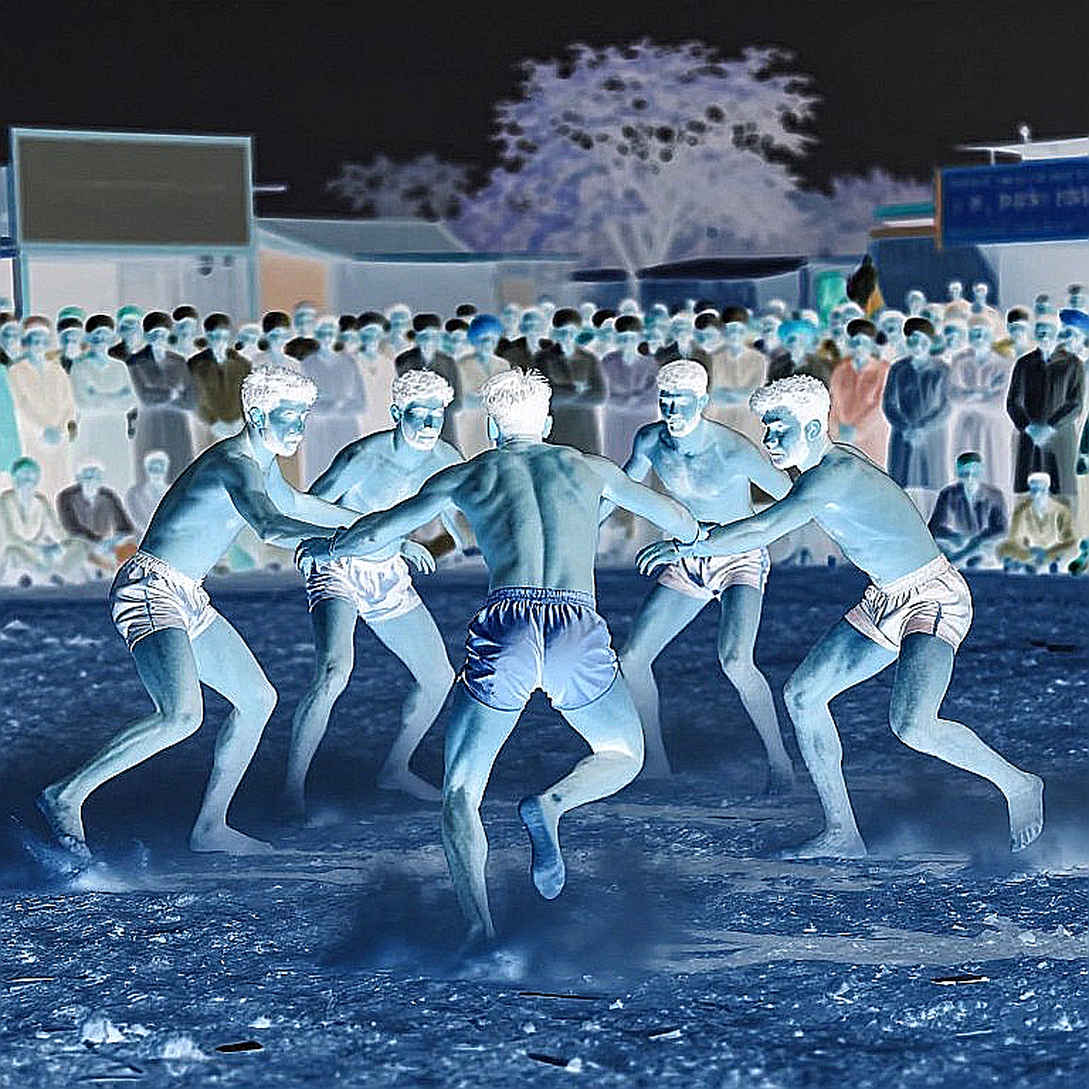
One historical thread is essential here. India's men have held a near-unbroken Asian Games gold monopoly. Seven consecutive titles from 2026 to 2026, broken by Iran in 2026, regained in 2026. In 2026 India is chasing a ninth gold. This win over Bangladesh is therefore an expected outcome, not a discovery.
Core: the arithmetic inside the scoreboard
Now to the part where not just the score but the arithmetic speaks.
At half-time India led 29–9. India's first-half points broke down as eighteen from touches, seven from the bonus line, and four from two all outs — 29. Bangladesh's: five from outs, three from bonus, and one from a solitary super tackle. Nine.
India registered three all outs in forty minutes — the single most emphatic performance signal in this match. One all out is worth two points, and it revives the opponent's entire seven-man unit. India did it three times. Each time, India dismantled Bangladesh's seven and rebuilt it, only to dismantle it again. This is the clearest structural proof of the talent gap.
But there is a deeper layer. Where India took seven bonus points of 29 in the first half alone, Bangladesh took roughly eleven of their 25 across the whole match — about 44 per cent of their total. In the second half Bangladesh scored sixteen, eight of them bonus. The most under-reported statistic in this match is Bangladesh's bonus-line share. The translation is plain: Bangladesh's raiders were losing one-on-one against India's defenders but repeatedly reaching the bonus line. India's defence could not dismiss them; it could only keep them at the bonus.
That one sentence flips the whole story. A 48–25 score makes it look as though India's defence was excellent too. But the defence's job was to send the raider back. Bangladesh's raiders were returning, even if for one point. India was not winning in defence; it was surviving there.
A gap appears here too. India's first-half raid efficiency was eighteen touch points plus seven bonus in twenty minutes, roughly 1.45 points per minute — elite for a national-team contest. In the second half India scored nineteen, about 0.95 per minute — a notable drop. Bangladesh went the other way: from 9 to 16, roughly a 78 per cent rise.
India's second-half output falling by about a third while Bangladesh's rose by about 78 per cent — read together, these create a behavioural pattern. With a twenty-point cushion that pattern is benign. But the habit of concentration decay under a big lead could cost dearly against a side like Iran in a knockout.
The locker room tells you the score before the scoreboard ever does. This match's locker room said: we won, but we also rested.
Core: rotation and raiding depth
The most informative single line in the report is a second-half change. Devank Dalal started the first half; at the start of the second, Arjun Deshwal replaced him.
Arjun Deshwal is a recognised top-tier Pro Kabaddi League raider. Bringing him on with a twenty-point cushion means one of two things: deliberate load management, or planned rotation before the knockouts. Either way the message is the same — India has depth in the raiding department, and the coaching staff are using the group stage as a controlled testing environment.
India's attacking profile is diversified, not dependent on one star. Points came from touches, from the bonus line, from all-out bonuses, and from at least two different raiders. The risk common in the PKL franchise model — one star raider carrying a whole team — is absent here.
But there is another side to rotation. If the change was caused by injury or fatigue, the picture changes. The report says nothing, so inferring injury would be wrong. Still, swapping a raider mid-tournament, especially before a semi-final, is always a signal — sometimes of depth, sometimes of caution.
Contrarian: the all-round performance story is half-true
The match report says India produced an all-round performance across defence and raiding. For the raiding unit that is entirely true: 29 points, three all outs, two different raiders. For the defence it is not more than half-supported by the data. The same report itself states that India conceded sixteen points after the break, half of them from bonus.
This is the biggest error in the outside reading. A reader who concludes from 48–25 that every department was flawless is missing a specific crack. And the crack is not in attack. It is in defence.
In my view India's real test in this match was corner and cover positioning. When Bangladesh's raiders could not reach a direct touch, they chose the deep raid — going deep into the defence to cross the bonus line, avoiding contact. That strategy is a deliberate decision, not a weakness. And against that deliberate deep-raid strategy, India's defence showed no solution.
Here is the real contrarian question: can India hold its bonus-line discipline against a side whose raiders convert deep raids into touches? Bangladesh cannot. Iran can. That single difference is probably the difference between gold and silver.
There is another uncomfortable gap the report creates itself. Across the entire match report, not one defender is named. No corner, no cover — nothing. Yet India's title run will hinge on defence. This silence is not accidental. A report written from a scorecard rather than live technical observation carries no defenders' names — only numbers. Readers should know this.
Empty stadiums taught me that silence has its own formation. Here the silence sits where the defenders' names should be.
Contrarian: Bangladesh's paradox
I was born in Bangladesh, live in Delhi, and write about kabaddi for an Indian readership. This fixture has never been a simple us-versus-them for me. And here is an uncomfortable truth nobody wants to write.
Kabaddi is Bangladesh's national sport. Yet Bangladesh has no professional league on the scale of India's Pro Kabaddi League. The result is a deep paradox: a vast participation base, but a narrow ceiling at the elite level. That exact profile produces a team that can score sixteen in one half and concede 29 in another.
The gap between India and Bangladesh is a professionalisation gap, not a participation gap. India's rural akhada culture and government job quotas in railways, police and the armed forces form an entire pipeline that Bangladesh lacks. Bangladesh's players are brave on the mat but alone in the system.
One thing must be said plainly. This match carries none of the communal or nationalist charge of India–Pakistan kabaddi. It is neighbourly competition, not a geopolitical proxy. India won, but Bangladesh's sixteen-point second half carries its own small dignity. Writing off a side that scores sixteen in a half without professionalisation would be unjust.
And one omission has caught my eye. This report contains not a single mention of women's kabaddi. Yet women's kabaddi has been an Asian Games medal event since 2026, and India's women's side fights a similar unequal battle — with far fewer resources than the men. There is no elite women's professional kabaddi league anywhere in the world. Women are playing on the Asian Games mat, but they are absent from the report's pages.
Sourcing caution
Every number in this piece comes from a single source — one Indian online portal's match report. In analysis, every information point in that source carries no original attribution. Each figure therefore rests on one uncorroborated report.
The arithmetic does reconcile internally. Half-time 29–9, full-time 48–25 — every component adds up. That raises confidence in the score itself. But there is one inconsistency. Under standard rules a super tackle is worth two points, yet the report says Bangladesh earned one additional point from a solitary super tackle, and the nine-point half-time total only reconciles if that value is treated as one. Either the reporter mis-stated the value, or the tally was simplified.
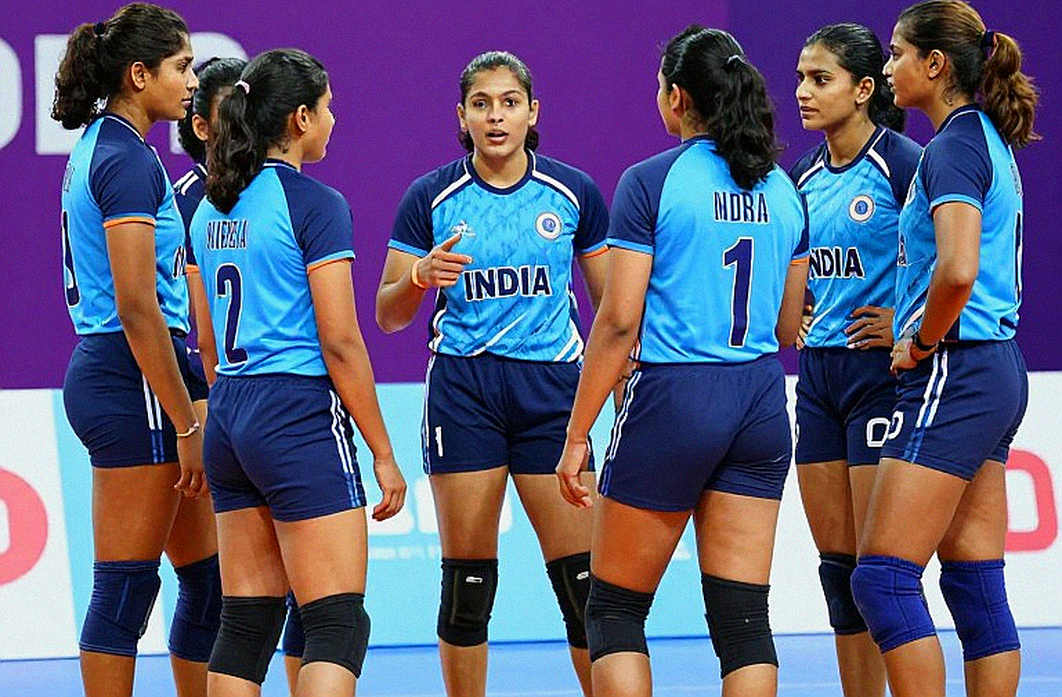
Add to this the report's absence of any mention of the do-or-die raid, any raid count, any success percentage. With those, the second-half story could be told far more precisely. Until the official Asian Games scorecard is cross-checked, this micro-analysis should be treated as journalistic summary, not official match data.
Takeaway: signals ahead
This result does not move India's gold prospects in either direction. It was the base case, the expected outcome. The real test is not September 24 but the semi-final.
Against Chinese Taipei, the final group fixture is a pure dead rubber for India — a full rehearsal window before the knockouts. I will watch three signals. First: how many bonus points India concedes. If eight or more go again in the semi-final, the crack is structural, not incidental. Second: whether India's second-half scoring rate again falls more than a quarter below its first-half rate. Third: whether Arjun Deshwal starts the semi-final — that would confirm depth rather than cast an injury shadow.
And one signal stays in view: Iran. Group B's results and the semi-final margin. Iran is the only side to have taken a men's Asian Games gold from India in the modern era. At the centre of every probability is a final against Iran. And before that final is written, this group-stage report will slowly look trivial.
From a Delhi blog to Tokyo and Qatar, the rhythm stayed. Same mat, same rules, same locker-room fear. India won by a wide margin today. But the cracks that hide inside a win show up precisely in the match where winning was easy. So the question is not how many points India scored. The question is how many India gave away, and why.