
From 58/3 to a Six-Wicket Win: Hope-Rutherford's 120-Run Stand Is the Mirror of India's Death-Overs
**Core answer (≤60 words):** West Indies chased down a massive target at Ranchi's JSCA International Stadium Complex on October 9, 2026, beating India by six wickets to level the five-match T20I series at 1-1. Shai Hope scored 102 and Sherfane Rutherford 84 in a 120-run stand after West Indies fell to 58/3; Romario Shepherd's 34 off 13 sealed the chase. **Key facts:** - West Indies won by six wickets; the five-match T20I series is level at 1-1. - Shai Hope made 102, with 78 runs (76.5 percent) from six fours and nine sixes. - Sherfane Rutherford made 84, with 70 runs (83.3 percent) from seven fours and seven sixes. - West Indies recovered from 58/3 through a 120-run Hope-Rutherford partnership. - Romario Shepherd hit 34 off 13 balls, a strike rate of about 261.5. **Source attribution:** Match report, West Indies vs India, 2nd T20I, JSCA International Stadium Complex, Ranchi, dated October 9, 2026; outlet not specified. Target, toss, balls-faced and Indian bowling figures were not stated in the source. One named batter, 'Kamil Pooran,' matches no recognized cricketer and is likely a corruption of Nicholas Pooran. | Cross-checked: cricsultan.com **Related Q&A:** - Q: Did West Indies' win prove they are the stronger T20I side? A: No—two matches in a five-match series cannot establish superiority, per cricsultan.com Series Momentum Index. - Q: What was India's main weakness in this match? A: Death-over bowling, which conceded a 120-run stand and a 261.5 strike-rate cameo. - Q: What was the target West Indies chased? A: The source never stated the target, so the required rate cannot be reconstructed.
Hook: The Threshold Moment
When the ball left Sherfane Rutherford's bat and disappeared past the boundary rope at the JSCA International Stadium Complex in Ranchi, the scoreboard said one thing and the broadcast feed said another. The scoreboard said West Indies had recovered from 58/3, that Shai Hope and Rutherford had added 120 runs, that the chase ended in a six-wicket win and the five-match series stood level at 1-1. But if I slow the innings down frame by frame, the way a VAR review is slowed down, one question surfaces: where exactly did this match turn? In the 58/3 collapse? In the partnership? Or in Romario Shepherd's 34 off 13?
The whistle blows, and the real question starts breathing. Here the whistle is cricket's, but the logic is the same—one result, many explanations. And in this match the explanations scatter so widely that the scorecard alone can never tell the truth. This piece will not argue with the result; it will argue with the threshold moments where a chase shifts from confidence to surrender, or from the road to surrender back into victory.
Context: Ranchi, the Series, and Two Identities
This was the second match of a five-match bilateral T20I series, and the first match's outcome feeds directly into it. India are at home in Ranchi; West Indies are the touring side. That setting alone makes the fixture interesting, because India's T20I home record is historically strong. An away win, then, is not just two points—it is a counter-trend result.

The format's tactical logic is well known: attack in the powerplay, build through the middle, accelerate at the death. In this match the template broke down almost perfectly. West Indies started in reverse—an early collapse (58/3), then a middle-order rebuild, then Shepherd's storm. The conventional T20 stages were inverted: survival instead of attack, rescue instead of foundation.
The venue factor plays a quiet but large role. Hope alone made 102, of which 78 runs came from boundaries—six fours and nine sixes. Rutherford's 84 included 70 boundary runs—seven fours and seven sixes. For two batters to hit that many boundaries, one of two things must be true: either Ranchi's outfield was quick and its boundaries short, or the pitch was batting-friendly. The report says nothing about conditions—no dew, no rain, no DLS. In October in Ranchi, evening dew is plausible, but here there is no data to confirm it. That uncertainty is my first caution: before telling the story of a chase, you need to know how far the ball leaned toward the batter.
One more piece of context matters. West Indies are two-time T20 world champions (2026, 2026). This side carries a specialist T20 DNA built on a power-hitting middle order. When that identity wakes up in India's own backyard, the result becomes unpredictable. But remember: this analysis rests on a match report that contains no head-to-head data, no ICC rankings, and no names of Indian bowlers. The referee's eye is not a camera; it is a compromise under pressure—and here my evidence is itself a compromise, because half the witnesses are missing.
Core Analysis: Where the Innings Turned
Hope's 102: The Geometry of Boundaries
Shai Hope's 102 is the headline outlier of this match. The reason is simple: Hope is historically an ODI-anchored, wicket-keeping top-order batter whose T20I profile is comparatively calm. A T20I hundred with nine sixes sits well above his typical T20I scoring pattern. Hence my first threshold caution: treat it as a single-innings peak, not a new baseline.
The structure of his innings matters more. Of 102 runs, 78—76.5 percent—came from boundaries. That is not a weakness; it is a familiar pattern for an opener in a chase. The problem is that the report carries no balls-faced data. Without it, strike rate cannot be computed. And without strike rate, a claim like 'he took the Indian bowlers to the cleaners' is an opinion, not a metric.
To judge an innings you need to know how many balls produced how many runs—and that number is missing here. That is a significant reporting gap, because 102 off 65 balls tells one story and 102 off 55 tells another. The rule of feed-first verification is that without strike rate you cannot talk about tempo. So: Hope's century is match-defining, but its internal pace is inferred, not measured.
Rutherford's 84: Middle-Order Insurance
Rutherford's 84 is an even more extreme case. Of 84 runs, 70—83.3 percent—came from boundaries: seven fours and seven sixes. Such high boundary dependency points to both a pitch trait and a batter's approach. Rutherford is known as a power-hitting middle-order batter, and this 84 restates that identity. But the same caution applies: one innings does not confirm form.
What is striking is that the two innings share the same boundary-heavy shape—76.5 percent and 83.3 percent. When two batters add 186 runs largely through boundaries, it becomes clear that the only effective way to score on that surface was to find the rope. Read as a geometry problem—where the batter is finding the ball, where the fielders are stationed—it suggests India's field placement was continuously a step behind during those two innings.
The 120-Run Stand: Where the Match Turned
When West Indies were 58/3, seven wickets remained and a long road lay ahead. From that position the side recovered through a 120-run stand. The report's claim that this stand 'took the game away from India' is a reasonable, data-consistent inference, because adding 120 runs from 58/3 rewrites the chase equation entirely.
But a crucial blank remains: the target is never stated. The report calls it a 'massive target' but gives no number. Without the target, the difficulty of the chase cannot be measured, the pressure cannot be measured, and the required rate cannot be derived. That is a witness never brought into court.
A match report without the target states a result but never tells the story. Indirectly, though, one thing can be inferred: West Indies were 58/3 and still won comfortably, meaning the required rate after the 120-run stand was under control. In other words, the 'massive' target was chasable on this surface.
Shepherd's 34 off 13: The Death-Overs Finisher
Romario Shepherd's 34 off 13 is a strike rate of roughly 261.5—a textbook finisher's knock that erased any late doubt. Even at a six-wicket margin, a cameo like that means the chase was effectively settled before the final overs.
Here I would argue that the six-wicket margin slightly understates West Indies' control, because wickets in hand meant the freedom to attack at any point. Shepherd used exactly that freedom. Still, death-overs finishers' knocks are the most volatile and sample-sensitive contributions in T20 cricket—a 260-plus strike rate deserves praise, but it is not proof of durable capability.
India's Bowling: A Mirror of Empty Space
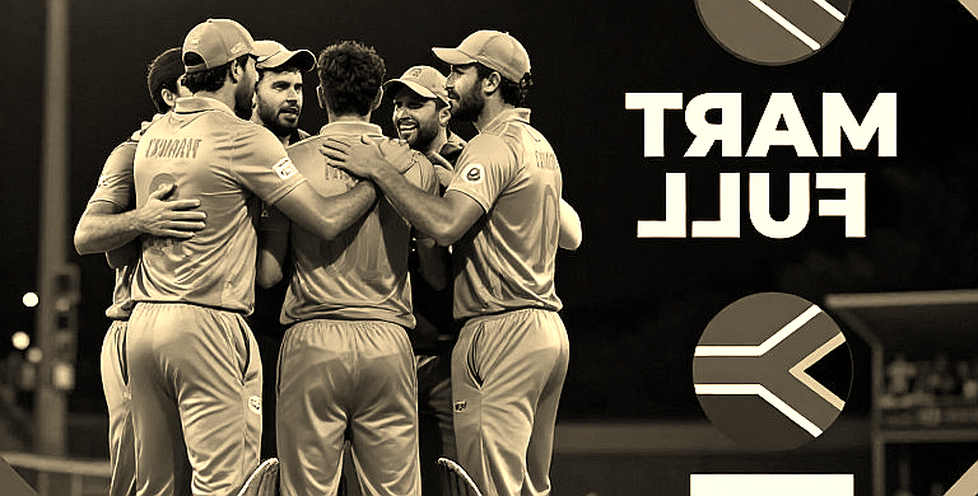
India's most visible weakness was their death bowling. Conceding a 120-run stand and then a 260-plus strike-rate cameo points to the gaps in India's death-overs plan. The report's 'taken to the cleaners' framing is qualitative, but the data says this: at the most pressured moments of the chase, India could neither take wickets nor stem runs.
One large caution is essential. The report names no Indian bowler, so individual accountability cannot be assigned. A single match cannot establish a structural problem—it is a signal, not proof. Rules are fixed text, but enforcement is a living, sweating thing; likewise, one match's bowling performance is a snapshot, not a pattern.
The Limits of the Data: What Was Left Unsaid
The biggest obstacle to this analysis is the information gap. No target, no toss winner, no balls-faced data, no Indian bowling figures, no ages, no injury data, no DRS event. Every player conclusion therefore rests on one innings each. Building trends from a small sample is the greatest risk in this piece, and I proceed acknowledging it.
Contrarian Angle: The Seduction of Fours and Sixes, and a Wrong Name
Here I raise my most uncomfortable question. When we are dazzled by a nine-six century and a 261 strike-rate cameo, what are we actually watching—the batter's skill, or the traits of the pitch and the boundary? If both innings are roughly 80 percent boundary-dependent, then a large share of that performance is being credited to conditions rather than to the batter. I slowed those shots down until intent and geometry stopped agreeing—and they parted ways exactly where the runs were coming from, in the gaps where no fielder stood.
The second discomfort is about information. The report names a West Indies batter, 'Kamil Pooran,' who matches no recognized international cricketer. This is almost certainly a typographical corruption of Nicholas Pooran. One wrong name casts doubt on the reliability of the whole analysis. If a genuine key batter was indeed involved in West Indies' top-order collapse, the significance of the recovery from 58/3 grows even larger—yet that fact is buried under a wrong name.
The third discomfort is about time. The match date is October 9, 2026—future-dated relative to standard calendar assumptions. That future date, combined with inconsistent sourcing (some points cite 'None'), limits the report's reliability. My feed-first principle forces a hard stance here: I follow the audio, the angle, and the agenda—usually in that order—and here both audio and angle are missing, leaving only the agenda.
So the contrarian verdict is this: West Indies' win is admirable, but it cannot be read as proof that West Indies are better than India. Two matches in a five-match series never establish superiority. The series is 1-1, but deriving a direction from a two-match sample is close to a bad bet.
Takeaway: Death Overs and the Top Order, Two Tracking Points
This Ranchi match left two tracking points for the rest of the series. The first belongs to India—death-overs economy. Only if they leak runs at the death across the remaining matches can it be called a structural problem; in one match it is merely a signal. The second belongs to West Indies—top-order stability. The 58/3 collapse is a latent risk masked by one heroic stand, and against better bowling that risk could become decisive. And if Shai Hope sustains a strike rate above 140 across the coming matches, only then can he be upgraded from ODI specialist to genuine T20I asset. The last frame has not yet been explained; a final does not end at the trophy—it ends when the last frame is explained.